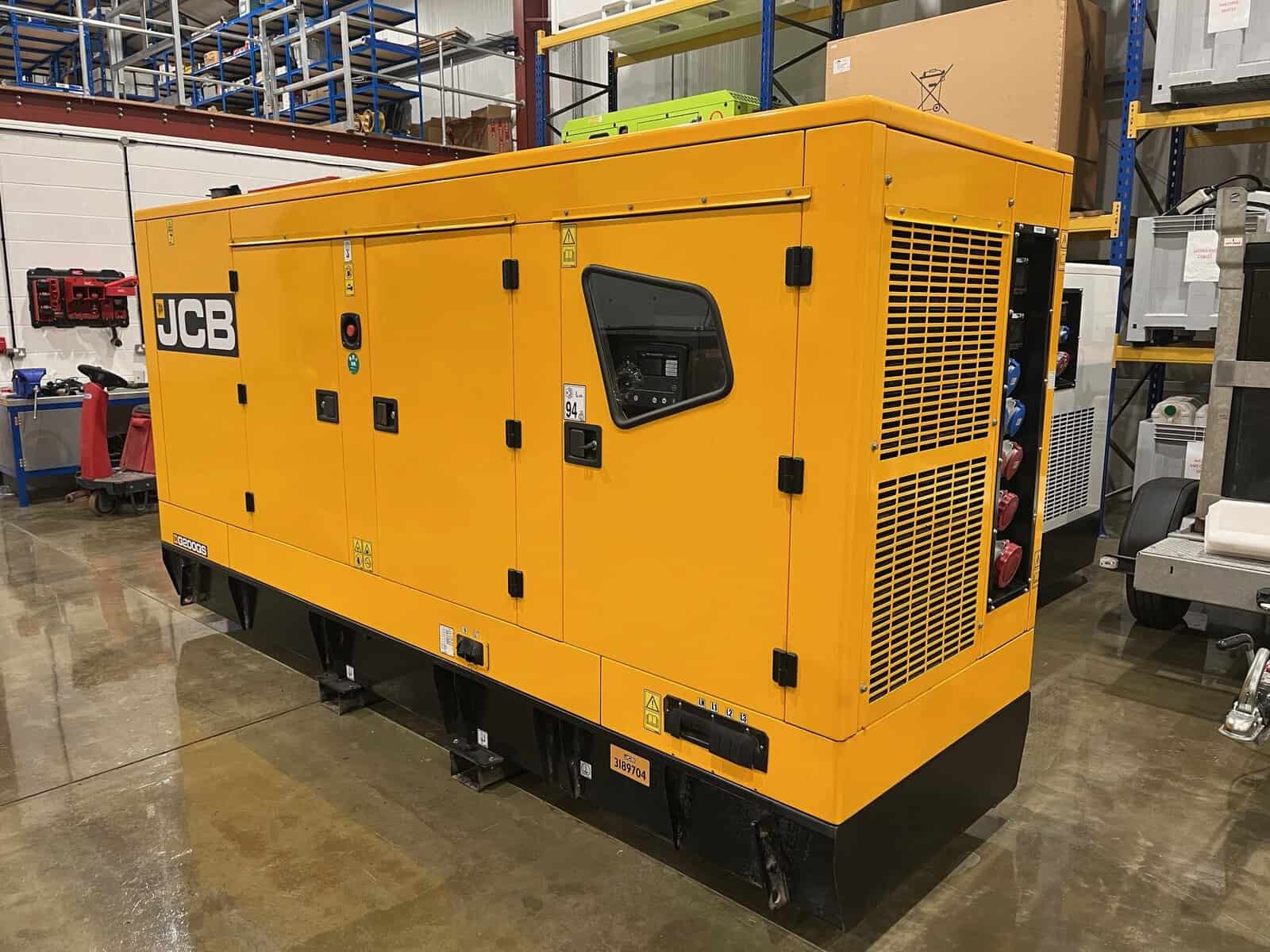
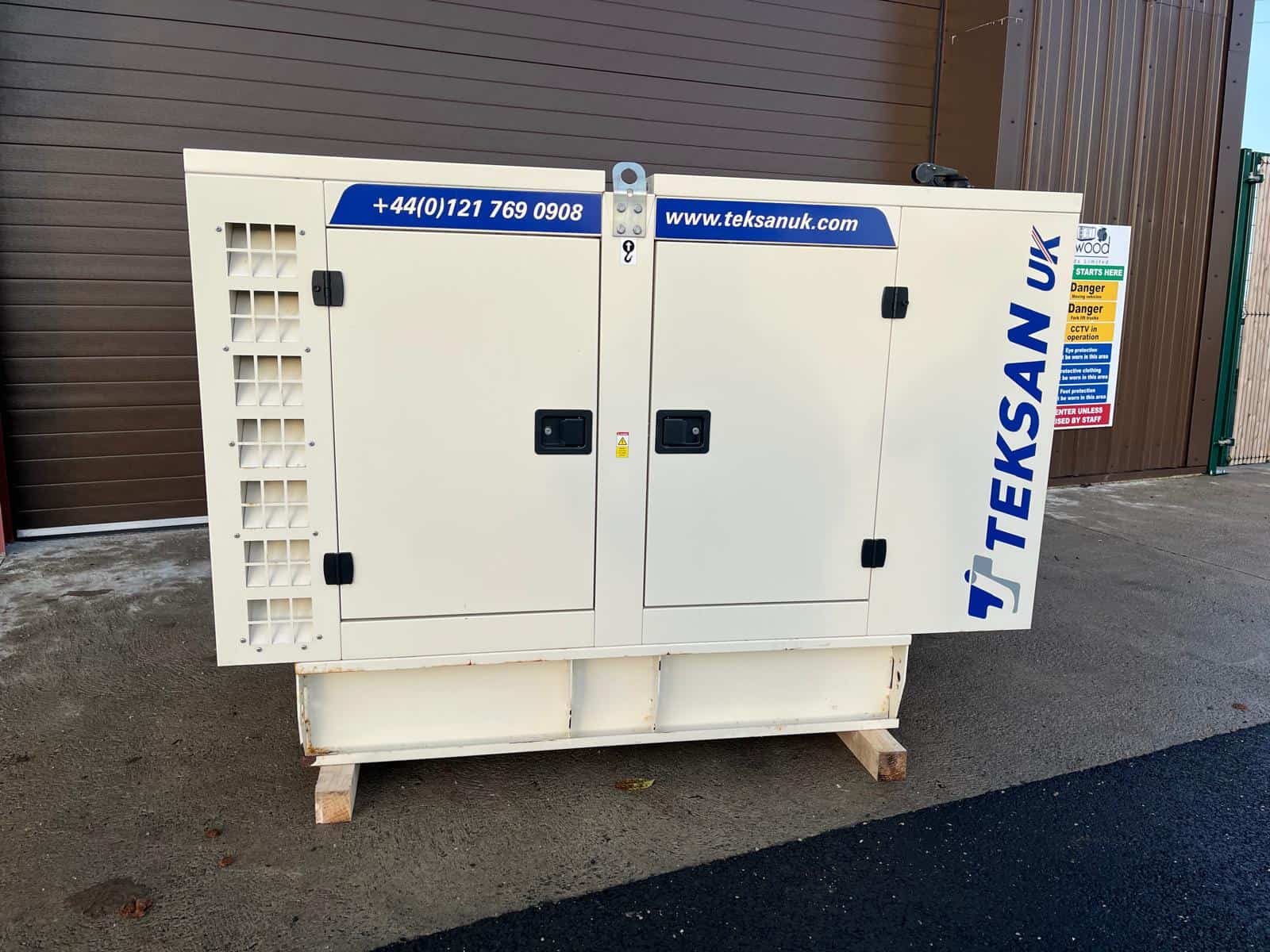
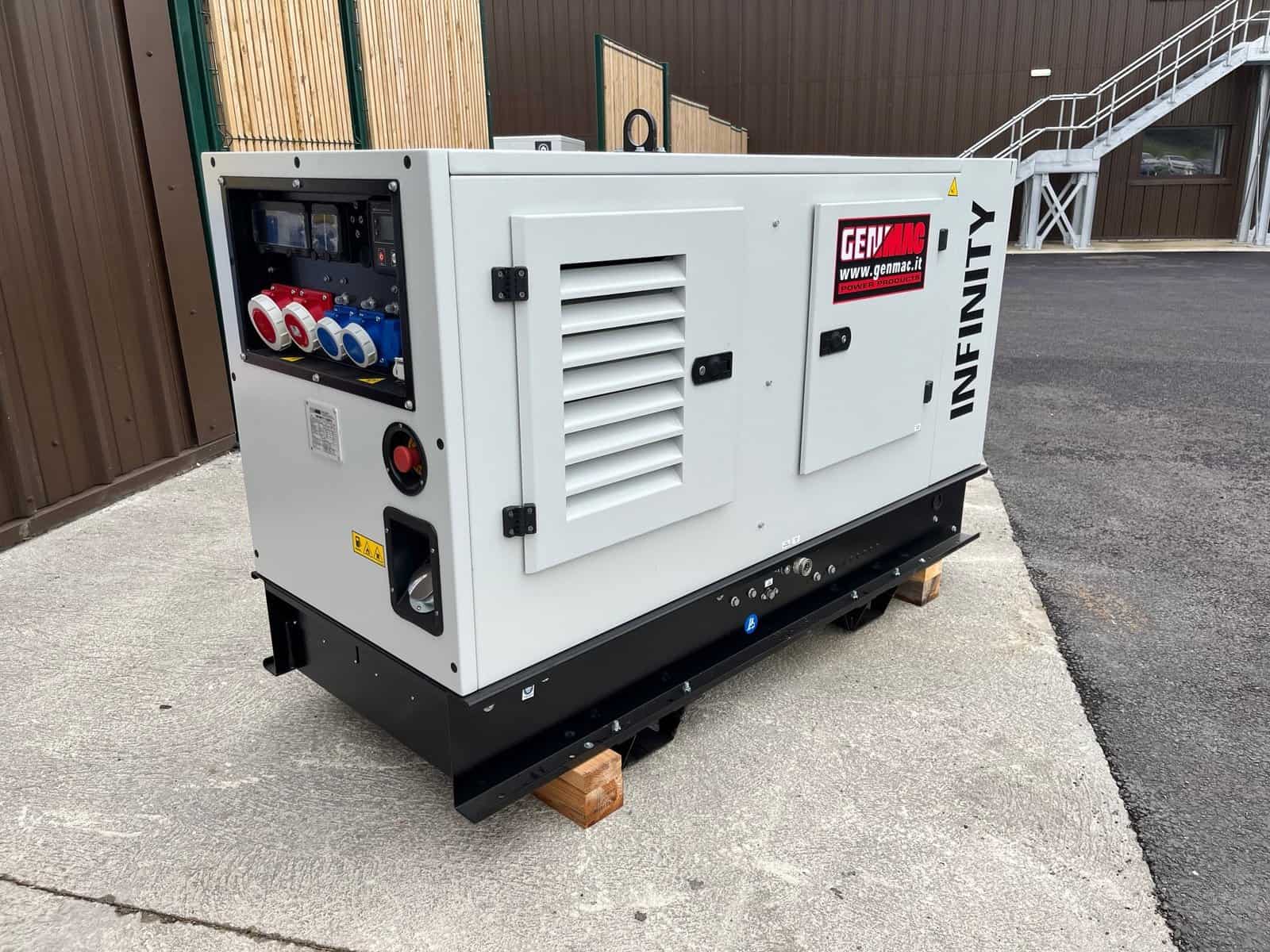
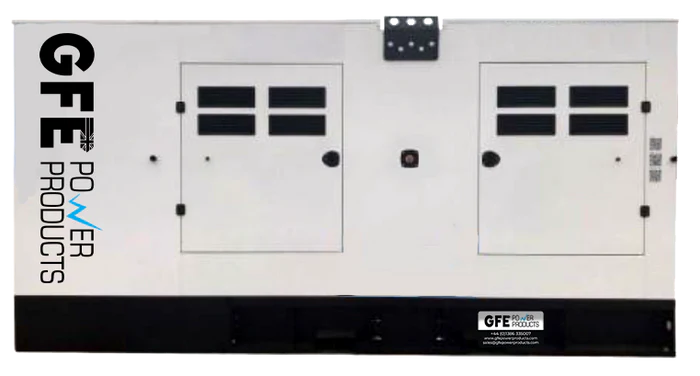
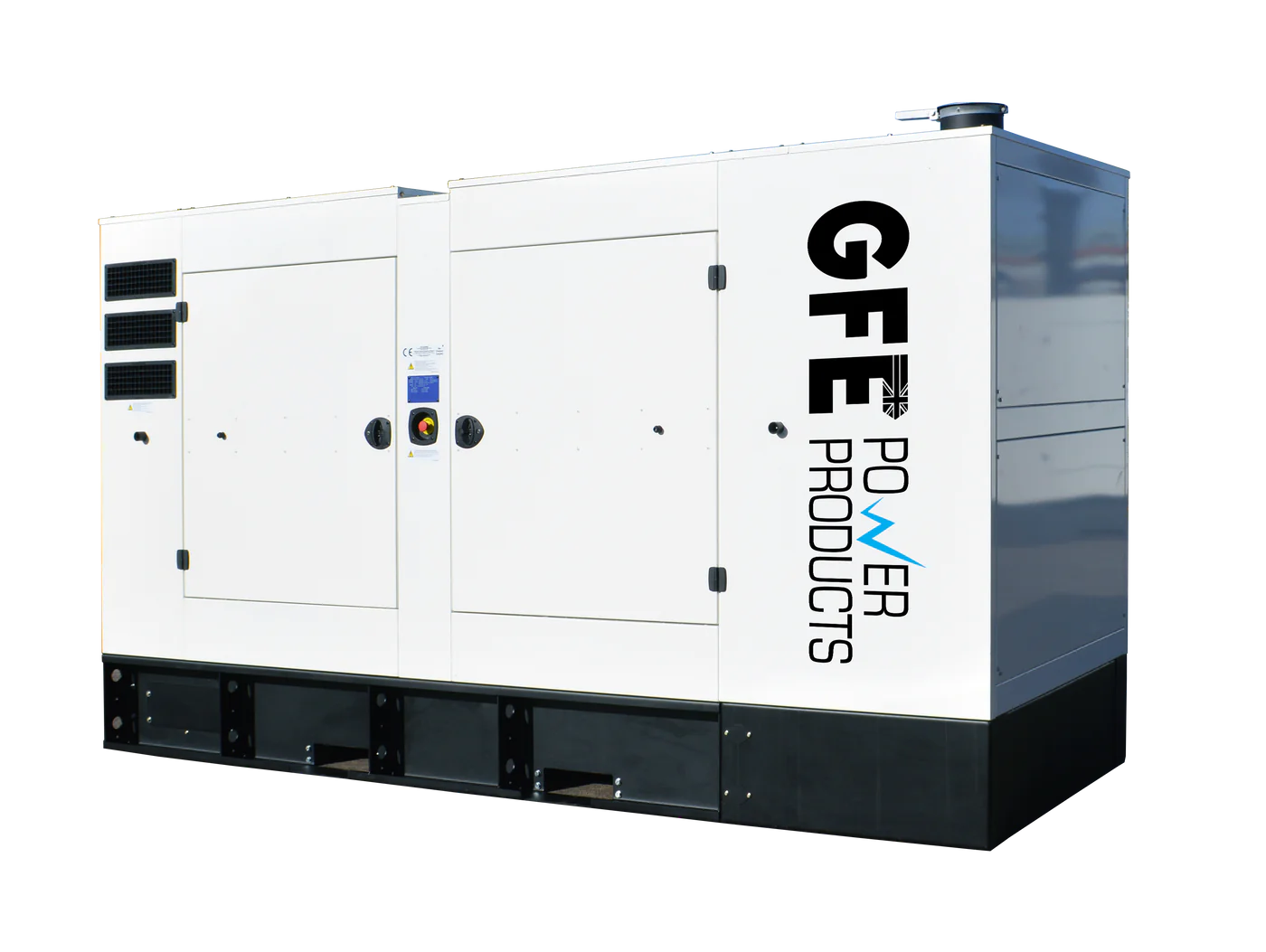
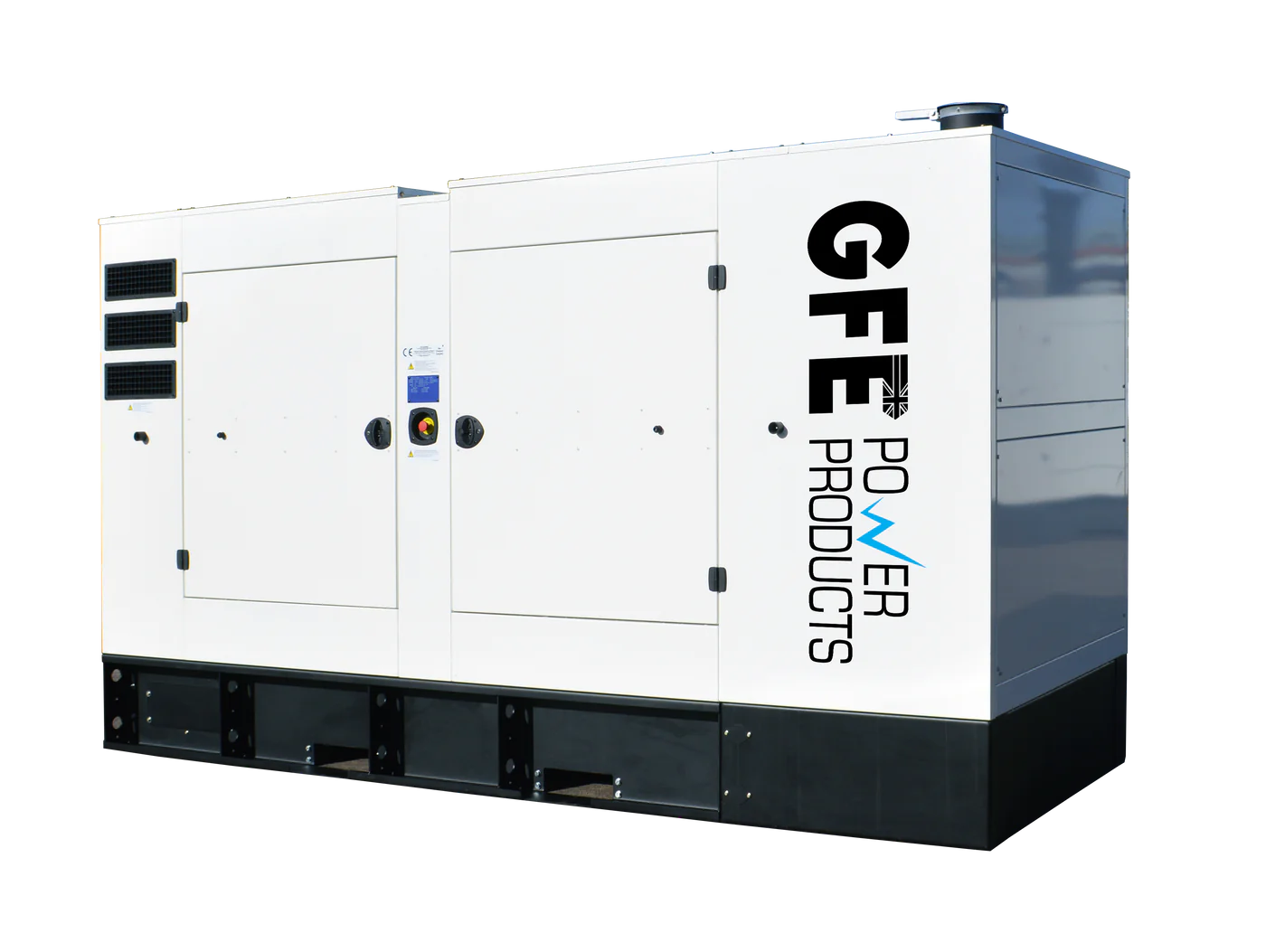
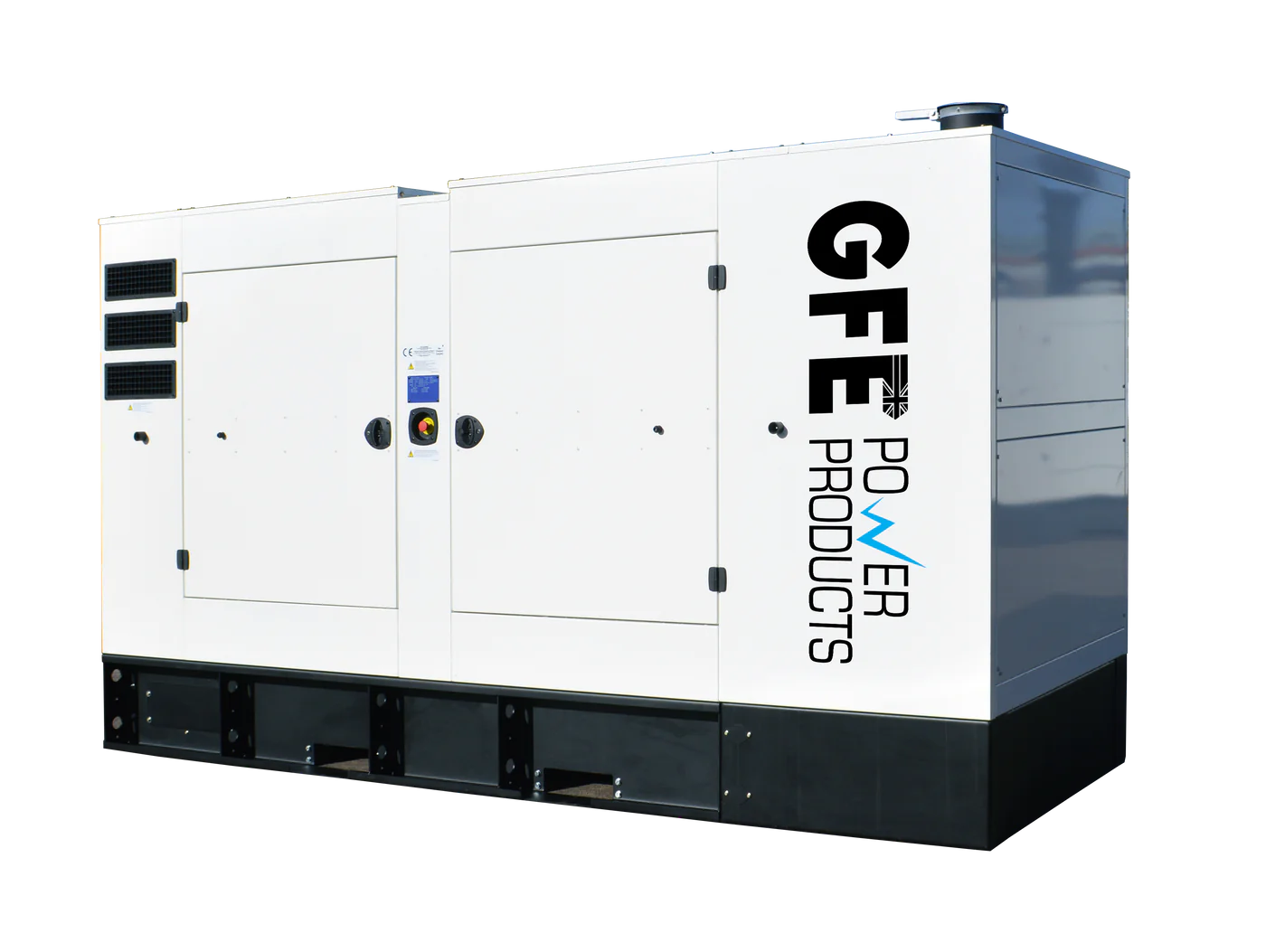
Construction sites place unusually high demands on power equipment. Dust, vibration, changing loads, frequent transport and harsh weather can all affect generator performance. A suitable construction site generator, therefore, needs more than enough power output: it must also be robust, correctly specified and able to provide a dependable supply throughout the working day.
Diesel generators are widely used across the construction industry because they combine strong load acceptance, fuel efficiency and durability. Modern units are available in weather-resistant and sound-attenuated enclosures, helping protect major components while reducing noise around the site. Some diesel models may also be approved for HVO fuel, subject to the manufacturer’s guidance, providing another option for projects working to reduce their environmental impact.
The load on a construction project can vary considerably from one stage to the next. Early groundworks may require pumps and compressors, while later phases may depend more heavily on lighting, welfare facilities, security systems and specialist tools.
- Hand-held power tools, including drills, saws and breakers
- Welding equipment and fabrication machinery
- Air compressors, pumps and dewatering systems
- Tower lights and temporary site lighting
- Site offices, welfare units and heating systems
- CCTV, alarms and access-control equipment
- Battery chargers and sensitive electronic equipment
- Cranes, hoists and larger three-phase machinery
The generator must be able to handle both the normal running load and the higher starting currents created by motors, compressors and pumps. Underestimating those demands can cause voltage drops, nuisance shutdowns or damage to equipment. Oversizing unnecessarily can increase fuel costs and lead to inefficient operation. Correct load assessment is, therefore, one of the most important parts of choosing a generator.
Choosing the Right Generator Size for Your Construction Project
There is no single generator size that suits every job site. The correct specification depends on the equipment operating simultaneously, the starting demand of motor-driven loads, the required voltage and phase, the expected running hours, and whether capacity is needed for later stages of the project.
Start by listing every item that may be connected, including its running wattage and starting requirement. The combined figure should then be converted into the appropriate kW or kVA requirement, with a sensible allowance for load variation and future equipment. Our guide to what size generator you need explains the sizing process in more detail.
Bellwood’s team can review your equipment list, working pattern and site plans before recommending a suitable generator. That helps prevent common problems caused by undersizing while avoiding the additional fuel consumption and purchase cost of an unnecessarily large unit.
Diesel, Petrol, Inverter or Hybrid Power?
Different generator types suit different construction applications.
Diesel construction generators are generally preferred for longer working hours, higher loads and demanding environments. They offer strong fuel efficiency, reliable performance and a long service life when maintained correctly.
Petrol generators can be a practical option for smaller jobs, mobile teams and short periods of lighter use. They are often compact and easy to transport, although fuel consumption may be less economical under prolonged load.
Inverter generators produce clean, stable electricity and can be useful where sensitive electronics, test equipment, or control systems need protection from voltage fluctuations.
Hybrid systems combine generator power with battery energy storage and, in some cases, solar panels. They can reduce engine runtime, fuel use, emissions, and noise during periods of lower demand. The right solution depends on the construction project rather than the technology alone.
**Ventilation is crucial when operating diesel generators on a construction site. Generators should be positioned outdoors or in properly designed, well-ventilated areas so that exhaust gases do not build up around workers, welfare units, or enclosed workspaces.
Fuel Efficiency and Runtime: Portable, Towable or Static Site Generators?
Mobility is another important consideration.
Portable generators are well-suited to small teams, changing work areas and tools that need power in different parts of a site. Towable generators provide greater capacity while remaining relatively easy to transport between projects. Static generators are more appropriate where site power needs to remain in one location for an extended period or where a larger distribution system is being supplied.
Consider access, lifting requirements, transport, fuel storage, theft prevention and the distance between the generator and connected equipment. Cable distribution should be planned carefully to avoid excessive voltage drop and unnecessary trip hazards.
Single-Phase or Three-Phase Power?
Many smaller tools and welfare facilities operate from a single-phase supply, while larger machinery, pumps, compressors and industrial equipment may require three-phase power. Some construction sites need both.
The generator must match the voltage and phase requirements of the connected equipment. Bellwood supplies single-phase generators and three-phase generators across a range of power capacities, and our team can help identify the most suitable configuration for your site.
Electrical distribution should always be designed and installed by competent people. The Health and Safety Executive advises that equipment used on construction sites must be suitable, safely maintained and selected for the working environment; reduced-voltage systems are commonly used for portable tools where appropriate.
Key Features to Consider
Buying can offer the best long-term value when a generator will be used across multiple projects, forms part of a permanent installation or needs to be available without arranging each deployment. It also gives the business greater control over servicing, specification and availability.
Generator hire may be more suitable for short-term contracts, fluctuating power requirements, or businesses that do not want to manage storage, transport, and long-term maintenance. Hiring can also make it easier to use different generator sizes as a project progresses.
Bellwood can support either route. We supply new and used generators for sale and provide generator hire for temporary site power. Our team will help you compare likely utilisation, project duration, budget, and logistical requirements, rather than steering you towards an unsuitable unit.
Safe Generator Operation on Construction Sites
Generator safety must be planned before the equipment arrives on site. Exhaust gases, electrical hazards, fuel storage, noise and moving components all require suitable controls.
Generators should be positioned outdoors or in a properly designed, well-ventilated location, away from occupied areas and air intakes. Exhaust fumes must never be allowed to accumulate in enclosed spaces. Power cables, distribution boards and protective devices should be appropriate for the load and site conditions, with routine inspections built into the project’s electrical safety arrangements.
The generator should also be kept away from standing water, combustible materials and routes where plant or vehicles could cause damage. Review Bellwood’s generator safety information and use a competent electrical contractor for any installation or distribution work.
Maintenance That Minimises Downtime
Regular maintenance is essential for construction generators because site conditions can accelerate filter contamination, connection wear, and cooling system problems. Checks should include oil and coolant levels, fuel quality, batteries, hoses, belts, air filters, electrical connections and warning alarms.
Service frequency should follow the manufacturer’s running-hour and time-based recommendations. Generators used daily or in dusty environments may require more frequent attention than occasional standby equipment. Keeping service records also makes it easier to identify recurring problems and plan work around project deadlines.
Bellwood provides generator servicing, repairs, and service kits to support equipment throughout its working life. Planned maintenance helps reduce the risk of breakdowns, protects performance, and keeps site power available when project completion depends on it.
Bellwood Rewinds combines generator supply with practical engineering support. We do not simply list products: we help customers identify the right generator size, duty, phase and configuration for their construction environment.
- New and used construction generators
- Portable, towable and static models
- Diesel, petrol and alternative power options
- Generator hire for temporary projects
- Delivery, positioning and installation requirements
- Servicing, repairs and replacement parts
- Long-term support for individual generators or fleets
Our available range changes as new and used equipment enters stock. Contact Bellwood Rewinds to discuss your project, connected equipment and operating schedule, and we will help you find a reliable power solution that supports productivity without unnecessary cost or complexity.
Find the Right Construction Generator for Your Site
Reliable temporary power is crucial on a busy construction site, particularly when generators support critical equipment, site facilities, or essential operations. Bellwood Rewinds supplies a full range of construction and industrial generators in various sizes, helping contractors, project teams and site managers choose equipment around their specific needs, expected load and working environment.
Whether you need a primary power source for an off-grid job site, additional capacity for a project or a backup generator to protect against disruption, our team can provide guidance on generator size, power output, fuel efficiency and the key features most relevant to your application. Choosing the right specification can improve reliability, help prevent damage caused by unsuitable or overloaded equipment and provide long-term operational benefit.
Browse the construction generators available above or contact Bellwood Rewinds today to discuss your site requirements and get help selecting the right generator for your project.