



Across every industry, the demand for consistent, reliable power has never been higher. Whether it’s in healthcare, manufacturing, commercial retail, or residential property management, electricity is the lifeblood that keeps operations moving and environments safe. But the question is no longer just about whether you have backup power—it’s about how smart that system is. At Bellwood Rewinds, we believe automated power backup is no longer optional; it’s essential for safety, efficiency, and future-proofing your facility or business. It’s about more than just having a generator on standby. It’s about integrating automation to ensure that, when the unexpected happens, your response is instant, seamless, and secure.
Traditional backup power setups typically rely on manual intervention. When mains electricity fails, someone has to be available to recognise the fault, start the backup generator, and ensure the correct systems are supplied with power. This process is not only slow—it introduces risk. Human error, delayed response times, and technical oversights can lead to critical failures in environments where every second matters. With automation, that entire chain of reaction is handled by intelligent systems. The moment a power outage is detected, your system responds instantly, shifting your load to the backup supply within seconds. This can make all the difference in preventing disruption, maintaining security, and protecting equipment. In facilities where safety and efficiency go hand in hand, this kind of automated resilience becomes a key part of operational infrastructure.
The most immediate benefit of automated power backup is the enhancement of safety. When the lights go out unexpectedly, panic often follows—especially in environments like care homes, hospitals, or large public venues. Automated systems eliminate that moment of vulnerability. Emergency lighting activates without delay, alarm systems stay live, and essential medical equipment continues to operate uninterrupted. Even in a warehouse or factory, loss of power can instantly disable lighting and machinery, putting workers at risk of injury. Automation ensures these transitions happen so quickly that many people on-site won’t even notice the power has switched over. This degree of reliability is vital for high-risk environments where a blackout could endanger lives or lead to costly downtime. Generators equipped with automatic transfer switches ensure that the backup supply takes over seamlessly, maintaining a safe, stable environment at all times.
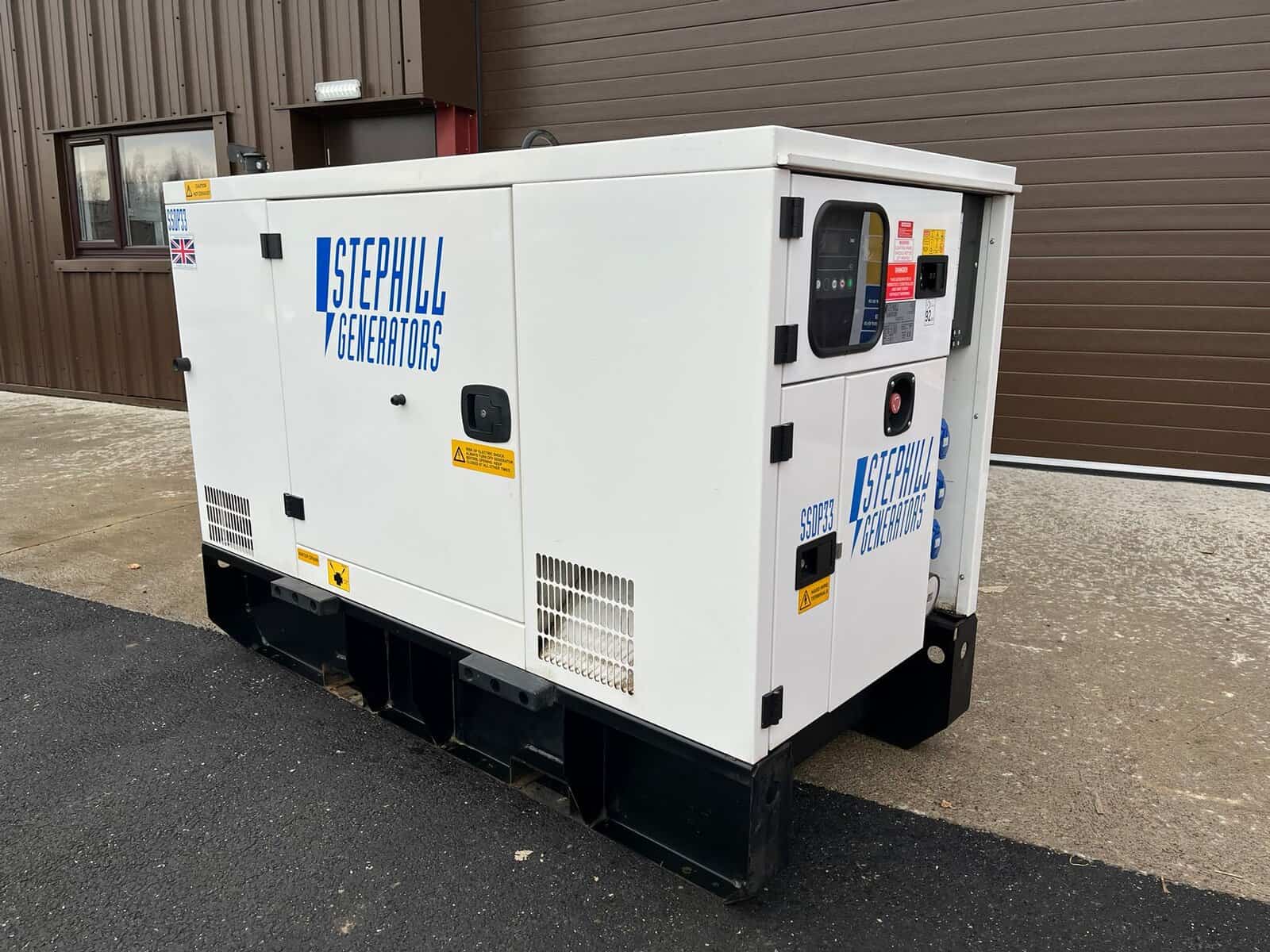
In the commercial sector, efficiency is closely tied to customer experience. A power cut in a retail space can bring tills, lighting, and security systems to a halt. Customers are left waiting, staff are thrown into disarray, and revenue can be lost within minutes. Automated power backup systems remove this uncertainty by maintaining operational continuity even during grid failures. Lights remain on, payment systems continue to process transactions, and climate control systems keep environments comfortable and compliant with regulations. Beyond retail, office buildings and hospitality venues also benefit from uninterrupted service. Meetings carry on, lifts remain operational, and guest experiences are protected. All of this is only possible with a well-designed system that knows when and how to act without human input. In these setups, generators play a pivotal role—but it’s the automation that turns them from reactive assets into proactive safety and business continuity tools.
Efficiency isn’t just about what happens during a power cut. It’s also about preventing problems before they arise. Many modern automated systems come with integrated monitoring and diagnostic tools that allow facility managers to track performance, receive alerts, and plan maintenance before faults occur. This reduces unplanned downtime, improves system longevity, and keeps operations running smoothly. Predictive maintenance capabilities allow operators to monitor everything from battery charge levels to engine temperature and fuel consumption. These insights can be accessed remotely, meaning engineers and technicians don’t always have to be on-site to ensure everything is functioning correctly. With this kind of intelligence built into your system, even complex environments with multiple power sources and load zones can be managed with confidence. At Bellwood Rewinds, we’ve helped clients across sectors implement systems that not only respond to outages automatically but also maintain themselves more efficiently, leading to fewer surprises and lower running costs. The combination of smart automation and quality generators forms the foundation of a modern, dependable power infrastructure.
Today, almost every business relies on digital systems to function. From cloud-based platforms to internal servers, data must remain secure and accessible. A sudden power loss can result in corrupted files, failed backups, or worse, complete hardware failure. In sectors like finance, education, or technology, even brief disruptions can compromise critical workflows and customer trust. Automated power backup is key to protecting this infrastructure. It ensures there’s no gap between mains failure and generator activation, meaning servers, routers, and storage devices remain stable throughout. For organisations that operate 24/7 or across time zones, this seamless transition is crucial. Downtime isn’t just inconvenient—it’s unacceptable. By implementing automated systems, businesses can avoid the reputational and financial damage that comes from data loss or prolonged service interruptions. Here again, the generator is the power source, but it’s the automation layer that guarantees continuity without human oversight or manual delays.


One of the less obvious but equally important benefits of automation is its ability to manage energy use more effectively. In a manual setup, a generator might run for longer than necessary or supply power to systems that don’t need it during an outage. Automated systems can be programmed to prioritise essential circuits only—keeping life safety systems, core machinery, and critical infrastructure online while temporarily disconnecting non-essential loads. This targeted distribution improves fuel efficiency and minimises wear on equipment. In environments where sustainability and cost control are top priorities, such precision offers measurable benefits. Smart controllers can even cycle loads in phases, gradually bringing systems online to prevent surges or overloads when the generator starts. As a result, equipment lasts longer, and energy use is better aligned with actual demand. At Bellwood Rewinds, we help clients build setups that strike the right balance between readiness and resource efficiency. Generators are most effective when supported by intelligent control systems that maximise every litre of fuel and every kilowatt of power.
Many industries are bound by strict regulations around power supply, safety, and equipment maintenance. In healthcare, for instance, CQC compliance requires evidence that emergency systems work reliably and can maintain essential functions during a power outage. In manufacturing, HSE standards require that lighting, alarms, and safety systems remain operational even in the event of mains failure. Automated power backup systems make it easier to meet these requirements. Logs from control panels can provide evidence of successful test cycles. Alerts and data streams can be used to demonstrate real-time performance. And because these systems run self-checks and diagnostics automatically, you can catch problems before an audit or inspection ever occurs. It’s another example of how automation adds not only technical capability but also administrative ease. Generators are a compliance tool—but only if they’re part of a system that can prove their effectiveness under scrutiny. Our clients trust Bellwood Rewinds to deliver both the hardware and the documentation needed to meet their legal and operational obligations.
As businesses grow, so do their energy demands. What starts as a simple backup system may need to expand to support new buildings, additional servers, or higher production volumes. Automated power backup systems are far easier to scale than manual ones. Smart controllers can be reprogrammed to manage additional circuits. New generators can be added and synchronised with existing units. And remote monitoring systems can be upgraded to give visibility across multiple sites. This kind of flexibility is especially valuable for organisations with dynamic growth plans or seasonal spikes in power usage. Instead of redesigning their power systems from scratch, they can build on what’s already there—adding functionality without compromising safety or reliability. At Bellwood Rewinds, we work with clients to future-proof their systems, helping them plan not just for today’s needs, but for tomorrow’s opportunities. By investing in automation early, they ensure that their backup power can grow in line with their ambitions.
A well-designed automated backup system doesn’t just sit idle waiting for an emergency. It can play an active role in day-to-day operations. Facilities running on variable tariffs might choose to run their backup systems during peak grid hours to save costs. Sites located in remote or rural areas may rely on regular generator use due to unreliable grid supply. In these cases, automation isn’t just a backup—it’s part of the main energy strategy. Systems can be configured to switch between sources based on demand, pricing, or supply stability. This level of integration transforms the way businesses think about backup power. It’s no longer a passive insurance policy—it becomes a smart, cost-effective contributor to everyday efficiency. Generators, when used in this way, go beyond their traditional role and become part of a dynamic, responsive energy ecosystem. This is especially relevant as more businesses look to reduce their reliance on the national grid or incorporate renewable sources into their supply chain.
While the benefits of automated power backup are clear, getting it right requires expertise. Poorly designed systems can fail to switch properly, overload circuits, or leave critical equipment without protection. That’s why working with an experienced provider is so important. At Bellwood Rewinds, we offer a full end-to-end service—from consultation and design to installation, testing, and ongoing support. Our team understands the complexities of different environments and can tailor solutions to fit your specific operational needs. We also provide regular servicing to ensure your system remains compliant, efficient, and ready to perform. Whether you’re adding automation to an existing generator or installing a new turnkey system, we make sure every component—from the switchgear to the control software—is set up for reliability and ease of use. In short, we don’t just sell equipment; we build partnerships that support long-term safety and performance.
Automated power backup is not just a technological upgrade—it’s a shift in how organisations think about energy resilience. By removing manual processes and replacing them with intelligent systems, you gain speed, reliability, and control. In environments where downtime is costly or dangerous, this difference can be transformative. Generators remain the backbone of many backup power systems, but it’s the automation layer that brings them to life when you need them most.
At Bellwood Rewinds, we’re proud to help businesses and institutions across the UK build smarter, safer, and more efficient power strategies. From critical infrastructure to small business operations, we provide the tools and expertise that turn backup power from a reactive solution into a proactive asset. If you’re ready to improve your power resilience and protect what matters most, we’re here to help—every step of the way. Contact us today.