



Generator maintenance is about far more than keeping an engine running. For businesses that rely on standby or prime power systems, a properly maintained generator protects operations, minimises downtime and ensures critical equipment continues to operate whenever mains power is unavailable.
At Bellwood Rewinds, we’ve spent decades supporting businesses across the UK with generator servicing, repairs and preventative maintenance. One thing we’ve learned is that most unexpected generator failures aren’t caused by catastrophic component failure; they’re the result of routine maintenance being overlooked. Flat batteries, contaminated fuel, blocked filters and deteriorating hoses are all relatively minor issues when identified early, but they can quickly develop into expensive breakdowns if left unchecked.
This generator maintenance checklist has been created to help businesses understand what should be inspected, how often maintenance should be carried out and when professional servicing is recommended. Whether you operate a standby generator protecting a commercial premises or a diesel generator providing continuous power, following a planned maintenance schedule will help maximise reliability, improve performance and extend the working life of your equipment.
Preventative generator maintenance is one of the most cost-effective investments any business can make. Waiting until a generator fails before taking action often results in higher repair costs, longer downtime, and unnecessary disruption to daily operations.
Generators are frequently expected to perform even in the worst possible circumstances, whether that’s a power cut, severe weather, or an unexpected fault with the mains electricity supply. Unfortunately, these are also the moments when neglected maintenance is most likely to reveal itself.
Routine inspections allow developing problems to be identified before they become serious. Replacing worn filters, monitoring battery condition, checking coolant levels and inspecting electrical connections all help ensure your generator remains ready to operate when required.
Preventative maintenance also provides longer-term benefits, including:
If routine inspections identify signs of wear, leaks or electrical faults, arranging professional generator repairs early can often prevent more extensive damage and minimise operational disruption.
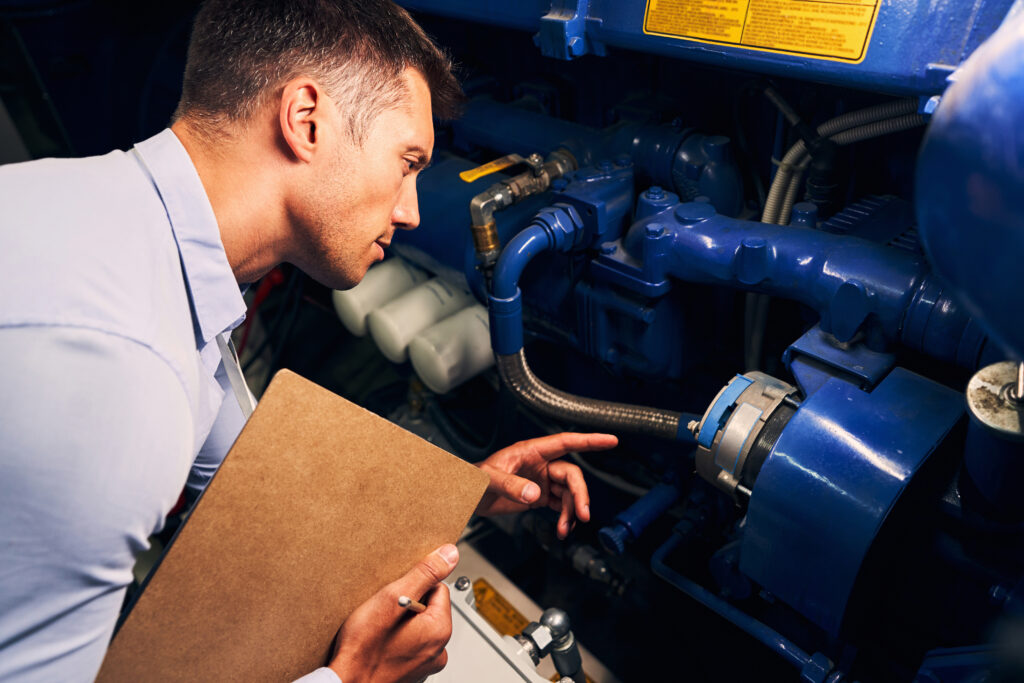
Although generators differ slightly by manufacturer and application, most commercial systems follow a similar maintenance schedule. The following checklist provides a practical framework for businesses carrying out routine inspections.
The table below provides a simple overview of how often key generator maintenance tasks should typically be completed. Actual service intervals may vary depending on the manufacturer, operating hours and the environment in which your generator is used. Always refer to the manufacturer’s recommendations alongside your planned maintenance schedule.
Maintenance Frequency | Typical Maintenance Tasks |
Daily | Visual inspection, check oil and coolant levels, inspect for leaks, review warning lights and alarms. |
Weekly | Exercise the generator under load, inspect the battery, check fuel levels and listen for unusual noises or vibration. |
Monthly | Inspect air, fuel and oil filters, clean battery terminals, examine belts, hoses and electrical connections. |
Quarterly | Inspect alternator performance, cooling system, fuel lines, vibration mounts and control systems. |
Annually | Professional generator servicing, oil and filter replacement, electrical testing, safety inspections and performance testing. |
Keeping to a consistent maintenance routine helps identify small issues before they develop into costly breakdowns. The timeline below provides a simple overview of how preventative generator maintenance should be approached throughout the year.

By following a structured inspection timeline, businesses can significantly improve generator reliability while reducing the likelihood of unexpected failures during power outages.
If your generator operates regularly, a quick visual inspection each day helps identify developing issues before they become serious problems.
Daily checks should include:
These simple inspections usually take only a few minutes but can significantly reduce the likelihood of unexpected failures.
Weekly inspections focus on ensuring the generator remains operational even if it hasn’t been required recently.
Recommended weekly tasks include:
Running the generator regularly helps lubricate internal components, reduces moisture build-up and confirms the system will operate correctly if an emergency occurs.
Monthly inspections allow a more detailed assessment of the generator’s condition.
Typical monthly maintenance includes:
Even standby generators benefit from regular monthly inspections, as long periods without operation can allow batteries to deteriorate and fuel quality to decline.
Quarterly maintenance should involve a more detailed inspection of both the engine and electrical systems.
Recommended checks include:
These inspections help identify gradual deterioration before it affects generator performance.
While routine inspections can often be carried out in-house, every commercial generator should receive professional servicing at least once a year.
A comprehensive generator service typically includes:
Professional generator servicing provides peace of mind that the entire system has been inspected by experienced engineers and continues to operate safely and efficiently.
One of the most commonly overlooked aspects of generator maintenance is regular exercise running.
Running a generator for approximately 30 minutes under an appropriate electrical load allows the engine to reach operating temperature, circulate lubricants and reduce moisture build-up inside the engine and exhaust system.
Generators that are regularly started but never placed under load can experience wet stacking, in which unburnt fuel and carbon deposits accumulate in the engine and exhaust. Over time, this can reduce efficiency and contribute to reliability issues.
For generators protecting critical infrastructure or operating within demanding commercial environments, periodic load bank testing provides additional confidence that the generator will perform correctly under full operating conditions.
Routine inspections don’t simply identify maintenance tasks, they also highlight when professional intervention is required.
Contact experienced generator engineers if you notice:
Addressing these warning signs early often prevents larger repairs and reduces costly downtime.
Many routine maintenance tasks involve replacing service consumables such as filters, seals and other wear components.
Using model-specific generator service kits helps ensure that all replacement components are compatible with your equipment and simplifies routine servicing.
Similarly, replacing worn components with high-quality generator parts helps maintain reliability and protects the long-term performance of your generator.
Generator maintenance should never be viewed as a reactive task carried out only after something goes wrong. Instead, it should form part of a planned maintenance strategy that protects your investment, supports business continuity and ensures dependable power whenever it’s needed.
By following a structured generator maintenance checklist, businesses can significantly reduce the likelihood of unexpected failures, improve efficiency, and extend equipment lifespan. Combined with regular professional servicing, preventative maintenance provides the confidence that your generator will perform exactly as expected when it matters most.
If you’re unsure about your generator’s maintenance requirements or would like to arrange professional servicing, the experienced team at Bellwood Rewinds is here to help. From routine inspections and planned servicing to fault diagnosis and repairs, we provide expert support to help keep your generator operating safely, efficiently and reliably.
A written maintenance schedule helps ensure inspections are completed consistently and provides a valuable service history for your equipment. Recording routine maintenance also makes it easier to identify recurring issues, demonstrate compliance with planned maintenance programmes and monitor generator performance over time.
We recommend keeping a simple maintenance log that records:
Whether maintenance is carried out by your own team or as part of a professional servicing programme, maintaining accurate records helps improve reliability and supports long-term generator performance.