



Are you considering the rental of a generator for your business? During your research, you’ve probably come across the terms kVA and kW. While both measure electrical power, they don’t mean the same thing. Understanding the difference between kVA and kW is important when selecting a generator, calculating power requirements or comparing generator specifications.
The difference between kVA and kW is that one is a measure of power, and the other is a measure of energy. The most common use of these two terms is in the power industry, where they describe how much power a generator can produce.
Let the expert team at Bellwood Reqwinds explain what kVA and kW mean, how they relate to each other and why understanding the difference is important when choosing the right generator.
kVA stands for kilovolt-amperes and measures apparent power.
Apparent power is the total power in an electrical system, including both usable and reactive power. Generator manufacturers commonly use kVA because it reflects the generator’s overall capacity rather than the specific load connected to it.
A generator rated at 100 kVA can supply 100 kilovolt-amperes of apparent power. However, not all of this power is available for useful work, which is where kW becomes important.
When sizing generators, kVA is typically the starting point because it provides an overall indication of the generator’s capacity.
kW stands for kilowatts and measures real power.
Real power is the power used to perform useful work, such as operating machinery, lighting, tools, pumps, air conditioning systems or electrical equipment.
Unlike kVA, which measures total apparent power, kW measures the actual usable power available to the connected load.
For example, if a generator has an output of 80kW, that represents the amount of power available to operate electrical equipment.
When businesses calculate their actual energy requirements, they often use kW demand rather than kVA rating.

The simplest way to understand the difference is:
A generator’s kVA rating represents its total electrical capacity, while its kW rating represents the usable power available to perform work.
Because electrical systems often contain motors, transformers and inductive loads, some power is required to create magnetic fields and support operation. This is known as reactive power.
As a result, kW is usually lower than kVA.
For most generators, a standard power factor of 0.8 is used.
This means:
Understanding this relationship helps ensure you choose a generator capable of supporting your actual power requirements.
Power is defined as the rate at which energy is used, expressed in watts. This can be calculated by multiplying voltage (V) by current (A).
Energy is the amount of work done by an electric current, expressed in joules (J). This can be calculated by multiplying voltage by current squared (V2 A).
Therefore:
kVA = kW x 0.836
Formula: kVA = kW x 0.836
Example: If a load has 3 phase, 4 wire, 240 VAC supply with a current of 5 A, then its power rating would be 240 V x 5 A = 1200 W or 1.2 kW (1 kW = 1000 W). If this load was connected to a generator rated at 2 kVA, then to calculate its power output we would use the formula P = U x I and substitute into it 2 kVA for P: P = U x I = 2 kV x 5 A = 10 VA which means that it can produce 1.2 kW (1 kW = 1000 W).
To convert kVA to kW, you need to know the power factor.
For most generators, the standard power factor is 0.8.
The calculation is:
Example 1
100kVA × 0.8 = 80kW
Example 2
50kVA × 0.8 = 40kW
Example 3
20kVA × 0.8 = 16kW
This simple calculation allows you to estimate the usable power available from a generator.
Many people also search for kVA to watts.
To convert kVA to watts, first convert kVA to kW using the power factor, then multiply by 1,000.
For example:
This provides a useful way to compare generator output with the wattage requirements of electrical equipment.

A 5kVA generator is one of the most common generator sizes used for domestic and light commercial applications.
With a typical power factor of 0.8, a 5kVA generator can provide approximately 4kW of usable power.
This is often sufficient for:
For larger loads or multiple appliances operating simultaneously, a larger generator may be required.
Different generator sizes are suitable for different applications.
Generator Size | Typical Applications |
Home backup, lighting, small appliances | |
Small workshops, offices and site cabins | |
Farms, retail units and small businesses | |
Construction sites and commercial premises | |
Manufacturing and industrial facilities | |
Large commercial and critical power systems |
Choosing the correct generator size depends on your total load requirements, starting currents and future expansion plans.

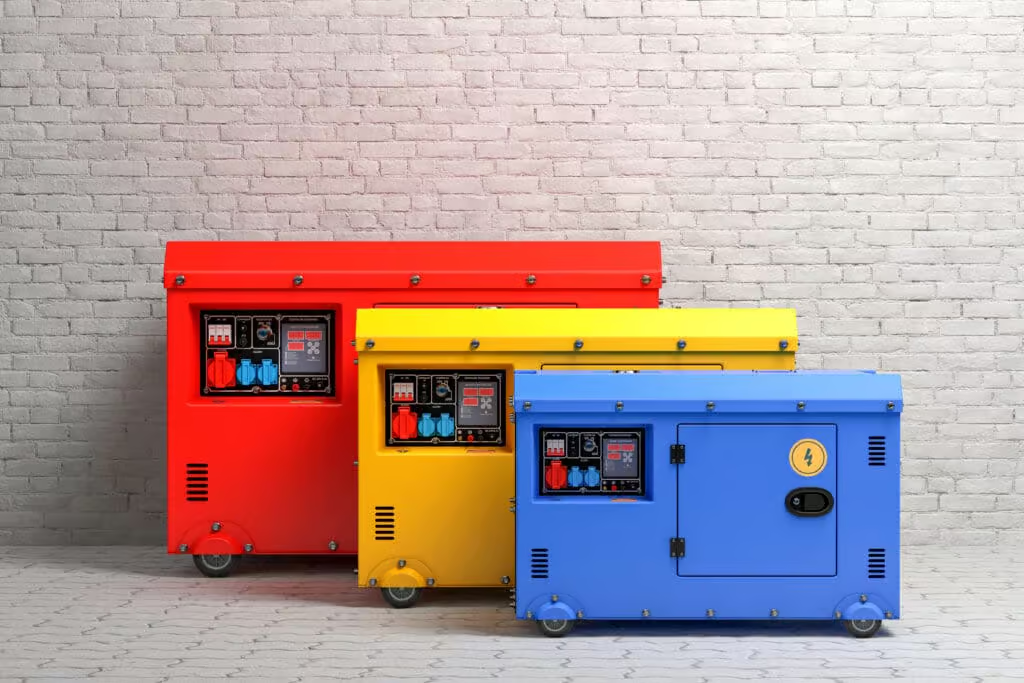
Generators are rated in kVA because the manufacturer does not know what type of load will be connected.
Different electrical loads operate with different power factors. By rating generators in kVA, manufacturers can provide a consistent measure of total capacity across applications.
This allows engineers and generator specialists to calculate the available kW output based on the specific operating conditions.
For this reason, you’ll often see generator categories grouped by kVA rather than kW.
Understanding kVA and kW is only one part of selecting the correct generator.
You also need to consider:
Our guide on What Size Generator Do I Need? explains how to calculate your power requirements and choose the correct generator size for your application.
In conclusion, understanding the difference between kVA and kW is crucial when choosing and utilising generators effectively. While kVA represents the total apparent power capacity, considering both real and reactive power, kW focuses solely on the actual usable power output.
By comprehending these distinctions, businesses can make informed decisions when hiring generators for their specific power requirements. Whether powering equipment, running appliances, or maintaining critical operations, Bellwood Rewinds, a reputable UK company, offers expert guidance and reliable generator solutions tailored to diverse business needs.
With this knowledge, businesses can ensure efficient and effective operation power management, promoting uninterrupted productivity and success.
kVA ratings help determine a generator’s total capacity and sizing requirements, considering both real and reactive power. kW ratings, however, indicate the actual power output available for running electrical devices. Both ratings are essential for selecting the right generator to meet specific power demands.Yes, in some instances, the kVA and kW values can be equal. This occurs when the electrical load is purely resistive, without any reactive components. In such situations, the power factor is 1.0, aligning the kVA and kW values.To convert kVA to kW, multiply the kVA value by the power factor (PF). The power factor represents the ratio of real power (kW) to apparent capacity (kVA) in an electrical system. The formula to convert kVA to kW is kW = kVA × PF.Several factors can influence a generator’s power factor and efficiency, including the types of loads connected to the generator (resistive, inductive, or capacitive), the balance of the load, and the quality of the generator’s voltage regulation. Proper load management and power factor correction techniques can help improve power factor and efficiency.
Power factor is a critical aspect that affects the efficiency and performance of generators. It represents the ratio of real power (kW) to apparent power (kVA) and is a key indicator of how effectively electrical power is being used. A power factor of 1.0 means that all the power supplied is being effectively used for productive work, whereas a lower power factor indicates that some power is wasted as reactive power.
Generators operating with a low power factor may experience increased energy losses and reduced efficiency, leading to higher operational costs. Improving the power factor can significantly enhance the generator’s performance, reduce energy consumption, and lower electricity bills. Various methods can be employed to improve power factor, including the use of power factor correction devices, such as capacitors and synchronous condensers.
Understanding the applications of kVA and kW is crucial for selecting the right generator for specific industrial needs. Different industries have varying power requirements based on their operational processes and equipment. For instance, in the construction industry, where heavy machinery and equipment are used, kVA is often the preferred measurement as it accounts for both real and reactive power needed to run motors and transformers.
In contrast, the IT and data centre industry typically focuses on kW, as real power is crucial for running sensitive electronic equipment and servers without interruptions. Similarly, the healthcare sector demands reliable kW ratings to ensure critical medical devices and life-support systems operate smoothly during power outages. By understanding the specific power needs of different industries, businesses can choose generators that provide optimal performance and efficiency.
When choosing the right generator for your power needs, it’s important to understand the role of petrol and portable generators, especially when considering power ratings like kVA and kW. Petrol generators are among the most popular types of generators due to their versatility, affordability, and ease of use.
They are powered by petrol engines, which convert fuel into electrical energy, making them ideal for a wide range of applications, from home backup during power outages to providing electricity on remote job sites and outdoor events. Portable generators, including those powered by petrol, are designed for ease of transport and use, making them an excellent choice for temporary or mobile power needs.
Their compact and often lightweight design allows them to be easily moved, set up, and stored, providing convenient access to power wherever and whenever it’s needed. Petrol generators, in particular, offer a quick and straightforward refuelling process, making them a practical solution for users who need a flexible and reliable power source without the constraints of more permanent installations.
When selecting a petrol or portable generator, understanding the difference between kVA (kilovolt-amperes) and kW (kilowatts) is crucial. kVA represents the apparent power, which includes both active and reactive power, while kW measures the actual usable power. This distinction helps you choose a generator that meets the power requirements of your specific appliances or equipment, ensuring efficiency and safety.
Petrol and portable generators are available in a range of kVA and kW ratings, allowing you to select the right model based on the total wattage of the devices you intend to power. At Bellwood Rewinds, we offer a wide selection of petrol and portable generators to suit various needs, backed by expert advice to help you make the best choice for your power requirements.
Kilowatts (kW) and kilovolt-amperes (kVA) are both measures of power. The difference between kW and kVA is that kW is a measure of power over time while kVA is a measure of instantaneous power. The values for kW and kVA are calculated using different formulas, but they’re both used to determine how much energy appliances will use.
The formula for calculating kW is Watts = Volts * Amps, while the formula for calculating kVA is Volts * Amps / 1000. To calculate the amount of kW or kVA required to run an appliance, plug in its voltage and current draw into either formula, depending on whether you need to determine instantaneous or continuous power.
Whether you’re purchasing a diesel generator, petrol generator or exploring generator hire options, understanding the relationship between kVA and kW can help you make a more informed decision.
At Bellwood Rewinds, we help businesses, contractors and homeowners identify the right generator solution for their power requirements. Our experienced team can provide guidance on generator sizing, power calculations and equipment selection.
Contact Bellwood Rewinds today to discuss your requirements and receive expert advice from our generator specialists.