



At Bellwood Rewinds, we’ve worked on countless generators, alternators, and voltage regulators over the years, and one of the most common questions we receive is how to properly adjust an automatic voltage regulator, or AVR. Whether you’re working with an industrial generator or a standby unit for backup power, understanding how to adjust an AVR is crucial to ensuring stable output, optimal performance, and the long-term reliability of your equipment.
We’ve put together this in-depth guide based on our experience servicing electrical machinery across the UK, to help both industry professionals and equipment owners navigate AVR adjustments safely and correctly.
Before diving into the adjustment process, it’s important to understand what the AVR is and why it plays such a vital role in generator performance. An automatic voltage regulator is a key component of any generator or alternator system. Its job is to regulate the output voltage to a consistent, predefined level, regardless of load variations.
When the load increases or decreases, the AVR compensates by adjusting the excitation to the alternator, which keeps the voltage stable. Without this regulation, voltage could fluctuate significantly, damaging sensitive electrical equipment and reducing the efficiency of your power system.
In essence, the AVR is the brain behind voltage stability. But like all brains, it sometimes needs fine-tuning to stay in sync with the wider system.
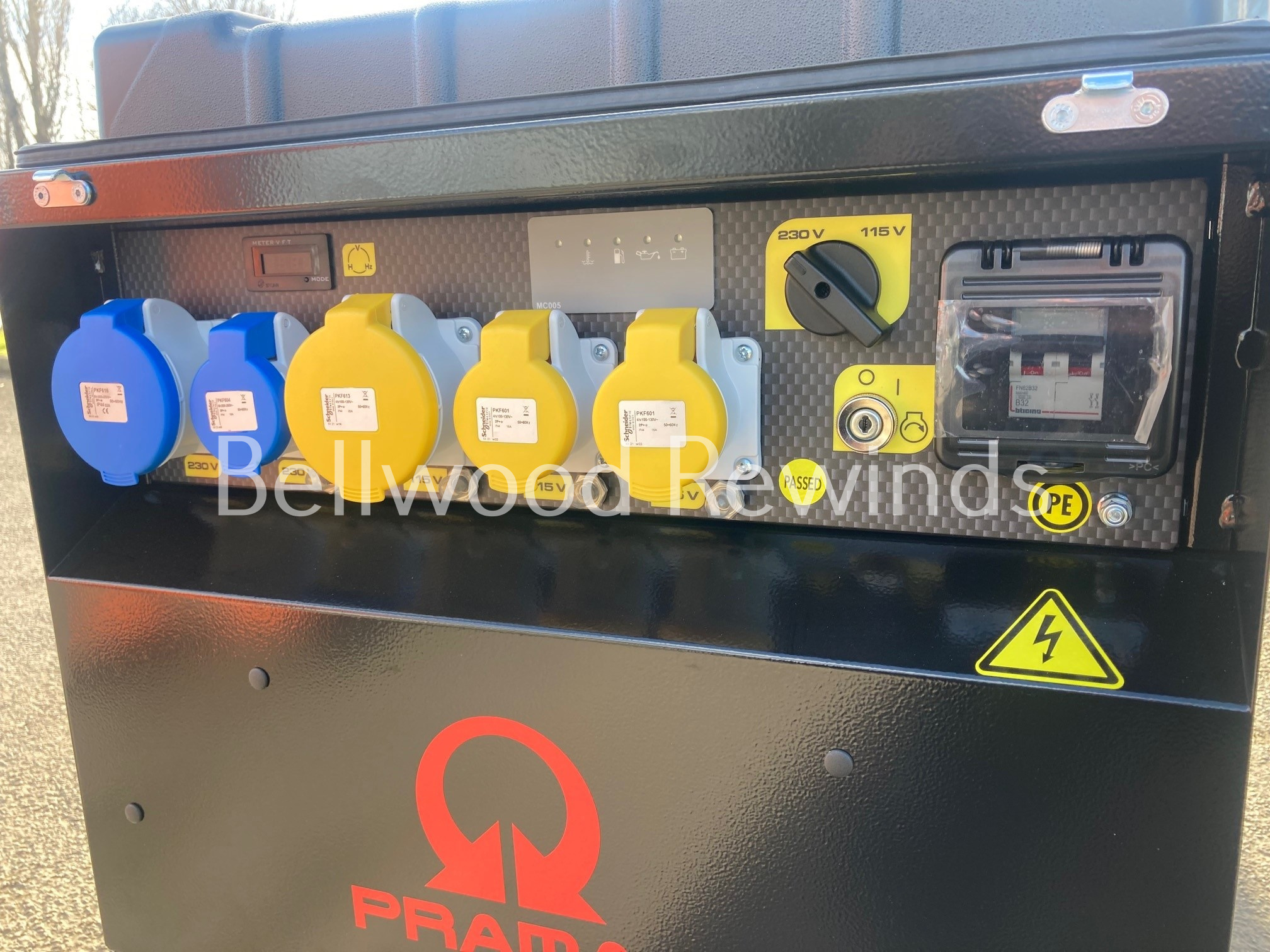
There are several scenarios where adjusting the AVR becomes necessary. Over time, components in the generator or alternator can age or wear, causing output voltage to drift from the desired setting. In other cases, adjustments may be needed after a repair, during a generator upgrade, or when integrating new loads.
We also see adjustments being made when a generator is being repurposed for a different application or when the generator is relocated to an environment with different voltage or frequency requirements. Environmental conditions such as temperature and humidity can affect generator performance, and fine-tuning the AVR helps mitigate these effects.
Faulty voltage regulation is another clear sign. If you’re noticing under-voltage, over-voltage, or inconsistent power output, it’s highly likely your AVR needs attention.
At Bellwood Rewinds, we always prioritise safety, and AVR adjustment is no exception. Before touching anything inside the generator or control panel, it’s essential to isolate the power supply. This means disconnecting the generator from any load and ensuring it’s turned off and safe to work on.
Only qualified electricians or technicians with experience in generator systems should attempt AVR adjustments. This isn’t a beginner-friendly task, as incorrect calibration can lead to serious equipment damage or even personal injury.
You’ll also need the right tools for the job. This typically includes an insulated screwdriver for making adjustments, a multimeter or voltmeter for monitoring output, and, ideally, the manufacturer’s AVR adjustment guide for your specific generator model.
The AVR is typically located within the generator control box or mounted on the alternator itself. It’s a compact electronic module, often with adjustment potentiometers labelled with terms such as ‘Voltage’, ‘Stability’, ‘Under-Frequency’, or ‘Gain’.
On some models, the AVR may be behind a protective cover, so accessing it will require removing the panel or casing with appropriate care. Once exposed, you’ll want to visually inspect the AVR for any signs of damage, scorching, or wear, as these can indicate underlying problems.
At Bellwood Rewinds, we always recommend inspecting wiring connections at this point as well. Loose or corroded terminals can mimic the symptoms of a faulty AVR, so it’s worth ruling those out before making any adjustments.
Once you’re ready to begin adjustment, start by powering up the generator with no connected load. Use a calibrated voltmeter to measure the output voltage at the terminals. If the voltage reading is outside the manufacturer’s recommended range – often around 230V for single-phase or 400V for three-phase – you’ll need to adjust the ‘Voltage’ potentiometer on the AVR.
This is done by turning the potentiometer slowly with a small, insulated flat-head screwdriver. Turning it clockwise will typically increase the voltage output, while turning it anti-clockwise will decrease it. The key here is to make gradual adjustments, checking the voltage after each small turn to avoid overshooting the correct level.
Once the desired voltage is achieved, allow the generator to run for several minutes to ensure the voltage remains stable. Keep a close eye on the meter, as fluctuations during this period may indicate the need for further fine-tuning or even a deeper fault elsewhere in the system.


In some situations, particularly where load conditions change rapidly, you may need to adjust the AVR’s stability settings. This ensures that the generator doesn’t ‘hunt’ or oscillate around the target voltage when loads are applied or removed.
The ‘Stability’ or ‘Gain’ control on the AVR determines how quickly the regulator reacts to changes in load. If the generator output fluctuates or seems to lag behind load changes, a slight clockwise adjustment can improve responsiveness. Conversely, if the system is too reactive and voltage swings wildly, backing off the gain can help smooth things out.
This step requires careful observation and testing under both no-load and full-load conditions. At Bellwood Rewinds, we often simulate varying loads in our workshop to ensure stability across a range of operating conditions.
Many modern AVRs include under-frequency protection features. These are designed to reduce excitation to the alternator when engine speed drops significantly, which helps prevent over-excitation and equipment damage.
If your AVR includes a ‘UFRO’ (Under Frequency Roll Off) setting, it’s crucial that this is set correctly. When the generator is operating below its rated frequency, typically 50Hz in the UK, the UFRO will reduce voltage output accordingly.
Adjusting this feature involves setting the knee point where voltage begins to drop off. If this is set too high, your generator might cut voltage unnecessarily during normal operation. If it’s set too low, it might fail to protect the system during an actual under-frequency event.
As with other adjustments, follow your generator manufacturer’s guidelines, and if in doubt, seek assistance from professionals like our team at Bellwood Rewinds. and convenience stores, benefit even more from uninterrupted trading during local grid failures.
Once you’ve made your initial adjustments, it’s important to test the AVR settings under a typical operating load. Start by connecting a light load and gradually increase it to the generator’s rated capacity, monitoring voltage at each step.
Look for signs of voltage drop or overshoot as the load increases. A well-adjusted AVR should maintain voltage within a tight tolerance band, generally within ±1% of the setpoint. Watch for flickering lights, motor slowdowns, or voltage alarms on connected equipment – these can indicate instability or incorrect settings.
During these tests, monitor the alternator’s excitation current as well. If the AVR is pushing the excitation too hard to maintain voltage, this could signal a deeper issue, such as winding degradation or a fault in the alternator field circuit.
Sometimes, no amount of adjustment can bring a faulty AVR back into specification. If your voltage output continues to drift, or if the AVR won’t hold settings consistently, it may be time for a replacement.
Signs of a failing AVR include burnt or scorched components, corrosion on the circuit board, unresponsive adjustment dials, or physical cracking of the casing. These issues are particularly common in older generators or units exposed to damp or corrosive environments.
At Bellwood Rewinds, we carry a wide range of AVR models suitable for most major generator brands, like Pramac, and we’re always happy to help identify compatible replacements and perform professional installations.
While it’s possible for experienced technicians to carry out AVR adjustments on-site, we always recommend professional calibration where possible. Improperly adjusted AVRs can lead to a host of operational problems, from erratic generator behaviour to serious damage to sensitive electrical equipment downstream.
AVRs must be balanced not just for voltage output, but for system frequency, load dynamics, environmental conditions, and generator capacity. Our team uses calibrated equipment, simulated load banks, and detailed diagnostics to ensure every adjustment is made to precise tolerances.
For commercial generators, compliance with regulations and equipment warranties often requires documented AVR testing and adjustment by qualified professionals. This is especially important for businesses relying on backup generators for critical operations, such as healthcare, manufacturing, or data centres.
Once your AVR is adjusted correctly, keeping it that way involves regular maintenance and inspection. This includes checking voltage output periodically, especially after extended periods of disuse or following a major load event.
Visual inspections of the AVR module during routine servicing can catch early signs of failure, such as discolouration, loose wires, or moisture ingress. Keeping the generator enclosure clean and dry also helps prolong AVR lifespan and performance.
We recommend scheduling annual servicing for most standby and prime power generators, and for high-demand systems, more frequent checks may be needed. At Bellwood Rewinds, our generator maintenance contracts include AVR inspection and adjustment as standard, so you can rest assured your equipment is in safe hands.
Adjusting an automatic voltage regulator is not a job to be taken lightly. While it might seem like a small component, its role in maintaining voltage stability and protecting your electrical equipment cannot be overstated.
Whether you’re troubleshooting erratic voltage, upgrading your generator system, or simply performing routine maintenance, understanding how to adjust an AVR – and when to call in professionals – is essential.
At Bellwood Rewinds, we bring decades of experience servicing generators and AVRs across the UK. From precision calibration to full AVR replacements, we provide reliable, expert-level support to keep your power systems running smoothly.
If you’re experiencing voltage issues, or you suspect your AVR needs attention, don’t hesitate to get in touch. Our engineers are ready to assist, diagnose, and restore performance – quickly, safely, and to the highest standards.